
What Is Industry?
Industry refers to economic activities involved in the production of goods, processing of raw materials, or delivery of services. It forms the backbone of modern economies by transforming natural resources and human effort into products and services that meet societal needs.
Industries operate at different scales, from small local enterprises to large multinational operations, and they collectively influence employment, trade, innovation, and national growth.
Types of Industry
Industries are commonly classified based on the nature of their activities. Each type plays a distinct role in the economic system.
Primary Industry
The primary industry focuses on extracting natural resources directly from the Earth.
Key examples include:
-
Agriculture and farming
-
Fishing and aquaculture
-
Mining and quarrying
-
Forestry
These industries provide the raw materials that other sectors depend on.
Secondary Industry
The secondary industry converts raw materials into finished or semi-finished goods through manufacturing and construction.
Major activities include:
-
Manufacturing factories
-
Food processing units
-
Construction and infrastructure development
-
Metal and textile production
This sector adds significant value to raw materials and supports large-scale employment.
Tertiary Industry
The tertiary industry delivers services rather than physical goods.
Common service-based industries include:
-
Transportation and logistics
-
Banking and insurance
-
Healthcare and education
-
Retail and hospitality
Service industries improve quality of life and support both primary and secondary sectors.
Quaternary Industry
The quaternary industry is knowledge-driven and focuses on intellectual services.
Examples include:
-
Information technology
-
Research and development
-
Data analytics
-
Consulting services
This sector is closely linked with innovation and technological advancement.
Quinary Industry
The quinary industry emphasizes social and personal services.
It includes:
-
Public administration
-
Social welfare services
-
Environmental management
-
Community development
Its primary goal is societal well-being rather than profit.
Importance of Industry in Economic Development
Industry is central to national and global progress. Its influence extends beyond production into social and technological domains.
Key contributions include:
-
Employment generation across skill levels
-
Economic growth through increased productivity
-
Technological innovation and modernization
-
Infrastructure development such as roads and energy systems
-
Improved living standards through accessible goods and services
A diversified industrial base helps economies remain resilient during market fluctuations.
Role of Technology in Modern Industry
Technology has fundamentally reshaped how industries operate, compete, and grow.
Automation and Smart Manufacturing
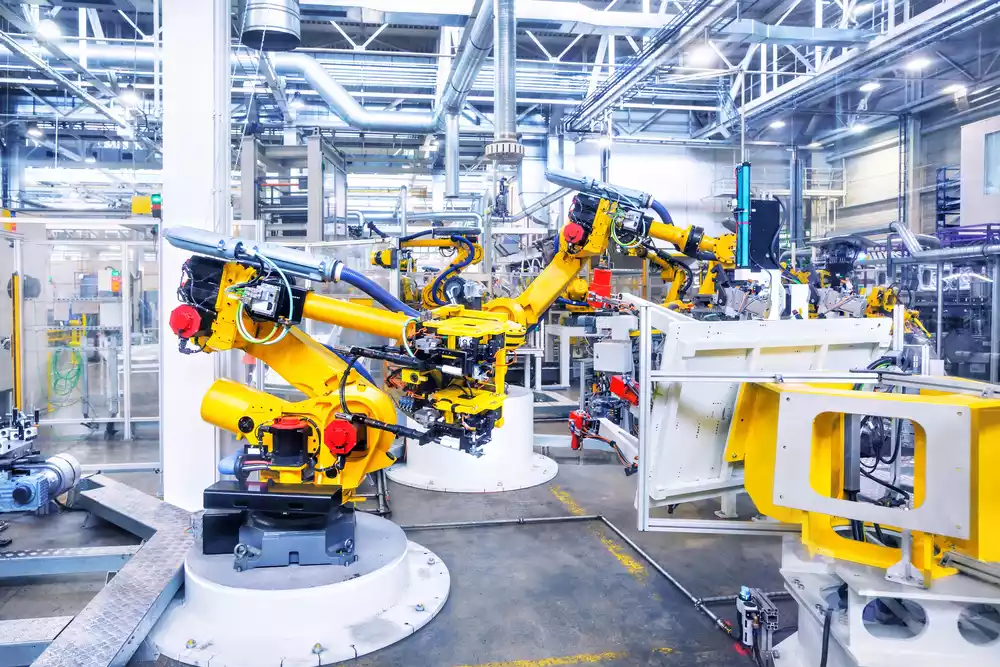
Modern industries rely heavily on automation, robotics, and smart systems to improve efficiency, precision, and safety.
Digital Transformation
Digital tools such as cloud computing, artificial intelligence, and data analytics enable:
-
Faster decision-making
-
Optimized supply chains
-
Predictive maintenance
-
Enhanced customer experiences
Sustainability and Green Practices
Industries are increasingly adopting eco-friendly processes to reduce emissions, minimize waste, and conserve resources, aligning economic goals with environmental responsibility.
Challenges Facing the Industrial Sector
Despite its benefits, the industrial sector faces several challenges that require strategic planning.
Major challenges include:
-
Rising energy and raw material costs
-
Environmental regulations and compliance
-
Workforce skill gaps
-
Global supply chain disruptions
-
Rapid technological change
Addressing these issues is critical for long-term industrial sustainability.
Future of Industry
The future of industry is shaped by innovation, sustainability, and digital integration. Emerging trends such as smart factories, circular economies, and clean energy adoption are redefining traditional industrial models.
Industries that invest in skills development, research, and sustainable practices are more likely to thrive in an increasingly competitive global landscape.
Frequently Asked Questions (FAQs)
1. What is the main purpose of industry?
The main purpose of industry is to produce goods or provide services that meet human needs while contributing to economic growth and employment.
2. How does industry differ from business?
Industry refers to a group of related economic activities, while business is an individual enterprise operating within an industry.
3. Why is industrial diversification important?
Industrial diversification reduces economic dependence on a single sector and increases resilience against market or economic shocks.
4. What skills are important for working in modern industries?
Technical skills, digital literacy, problem-solving abilities, and adaptability are essential in today’s industrial environment.
5. How does industry impact the environment?
Industrial activities can affect the environment through pollution and resource use, but sustainable practices help minimize negative impacts.
6. What is industrial automation?
Industrial automation involves using machines, control systems, and software to perform tasks with minimal human intervention.
7. How is globalization affecting industries?
Globalization expands market access, increases competition, and encourages innovation, while also exposing industries to global risks and supply chain dependencies.