
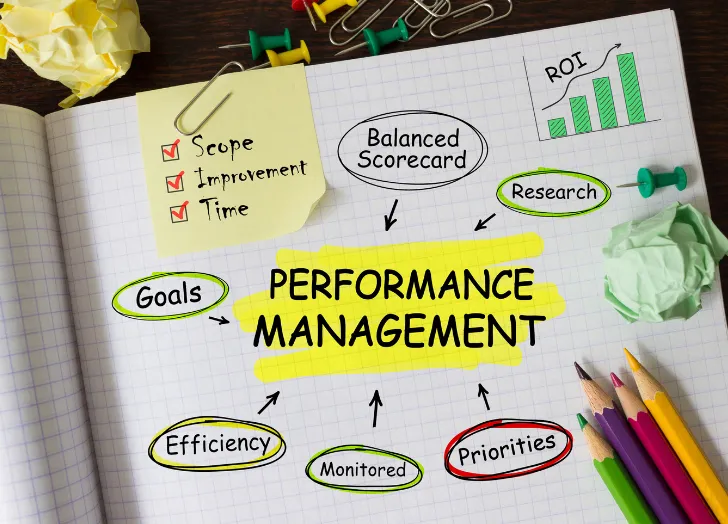
Managing high-performing teams requires far more than handing out quarterly evaluation forms and conducting annual reviews. In fast-moving business environments, traditional annual appraisals are often backward-looking, slow, and disconnected from day-to-day operations. Modern performance management is an active, continuous system built to align individual goals with company vision, cultivate employee strengths, and remove operational roadblocks.
When leaders build structured yet flexible performance management systems, productivity follows naturally. Employees gain clarity regarding expectations, understand how their daily tasks drive bottom-line results, and feel supported in their professional growth. The following actionable strategies enable leaders to overhaul performance management and generate measurable productivity gains.
Establish Clear, Agile Goal Frameworks
Productivity drops when employees work under vague priorities or shifting targets. High-performing organizations establish goal frameworks that define success while maintaining sufficient flexibility to adapt to market shifts.
The two most effective methodologies for goal alignment are:
-
Objectives and Key Results (OKRs): This framework couples qualitative, ambitious objectives with quantitative, measurable outcomes. It prevents ambiguity by defining exactly what needs to be achieved and how progress will be measured.
-
SMART Goals: Structuring individual tasks to be Specific, Measurable, Achievable, Relevant, and Time-bound ensures team members focus their daily energy on high-value initiatives rather than peripheral tasks.
Goals should not be set in isolation. Collaborative goal-setting, where managers and direct reports jointly establish deliverables, increases psychological ownership. When team members understand the strategic context behind their metrics, they prioritize their workloads more effectively and execute tasks with greater autonomy.
Shift from Annual Reviews to Continuous Feedback Loops
Relying on an annual review to correct performance issues is counterproductive. Waiting months to address a bottleneck means inefficiencies compound over time. Continuous performance management replaces stressful annual appraisals with routine, real-time feedback loops.
Effective continuous feedback incorporates several core practices:
-
Weekly or Bi-Weekly One-on-Ones: These meetings should focus on active projects, immediate challenges, and priority adjustments rather than administrative status updates.
-
Immediate Recognition and Course Correction: Commend achievements promptly to reinforce productive behavior, and address mistakes while details are fresh so employees can adjust before habits solidify.
-
Forward-Looking Coaching: Instead of cataloging past errors, frame feedback around future execution, skill acquisition, and workflow optimization.
This regular cadence demystifies evaluations, reduces workplace anxiety, and allows teams to pivot rapidly when project scopes or market conditions shift.
Implement Objective, Data-Driven Performance Metrics
Subjective evaluations introduce bias, breed resentment, and obscure actual output. High-yield performance management relies on objective data to measure both individual contributions and team health.
To establish fair, performance-based metrics:
-
Track Outcomes Over Activity: Measure tangible deliverables, project completion velocity, and customer satisfaction rather than hours logged or messages sent.
-
Standardize Key Performance Indicators (KPIs): Define role-specific KPIs so every team member understands the precise criteria used to assess their contribution.
-
Leverage Centralized Dashboards: Use project management platforms to give team members visibility into shared milestones, individual task ownership, and project dependencies.
Transparent metrics eliminate guesswork, allowing managers to identify top performers for promotion while providing struggling employees with precise targets for improvement.
Foster Psychological Safety and Two-Way Accountability
Productivity suffers in high-fear workplaces where employees hesitate to report obstacles, propose ideas, or admit mistakes. Psychological safety is the baseline condition required for innovation and sustained operational efficiency.
Performance management must be a two-way dialogue, not a top-down mandate. Leaders can build an environment of mutual trust by adopting key behaviors:
-
Encourage Upward Feedback: Ask direct reports how leadership can better support their workflow, provide clearer guidance, or eliminate procedural friction.
-
Treat Missteps as Learning Opportunities: Conduct blameless post-mortems on failed projects to diagnose root operational causes without assigning personal fault.
-
Decentralize Decision-Making: Empower team members to resolve client issues and execute workflows within established guardrails without requiring multi-layer managerial sign-offs.
When employees feel safe taking calculated risks and speaking candidly about bottlenecks, problem resolution accelerates across the board.
Integrate Professional Development with Daily Roles
Employees are significantly more engaged and productive when they see a direct link between their current duties and their long-term career advancement. High turnover and burnout often stem from the perception of career stagnation.
Incorporate employee development directly into performance plans:
-
Individual Development Plans (IDPs): Build structured roadmaps outlining the technical proficiencies, leadership capabilities, and certifications employees need to advance to their next target role.
-
Internal Upskilling and Cross-Training: Provide access to specialized training programs and allow team members to shadow other departments to broaden organizational knowledge.
-
Stretch Assignments: Assign high-potential employees to complex projects that push their skill boundaries while providing adequate mentorship support.
Investing in internal capability building elevates overall team output and reduces the productivity losses associated with employee turnover.
Design Transparent Recognition and Incentive Systems
Unrecognized effort leads to disengagement, which directly drags down team throughput. Recognition systems must be consistent, merit-based, and visibly connected to defined team goals.
To design an effective incentive structure:
-
Connect Rewards to Measurable Milestones: Link bonuses, spot awards, or extra time off to specific, documented achievements rather than subjective managerial preferences.
-
Encourage Peer-to-Peer Recognition: Implement programs where colleagues can publicly acknowledge one another for teamwork, support, and problem-solving.
-
Celebrate Micro-Wins: Acknowledge intermediate project milestones to maintain momentum during long, demanding initiatives.
Authentic recognition validates hard work, raises morale, and sets clear behavioral benchmarks for the entire organization.
Modernize the Performance Tech Stack
Managing modern teams with manual spreadsheets and fragmented email chains creates administrative drag. Performance management software streamlines tracking, aligns workflows, and generates useful organizational analytics.
Select tools that support:
-
Integrated Task and Goal Tracking: Platforms that integrate directly with everyday communication tools reduce context switching.
-
Asynchronous Check-Ins: Automated prompts for weekly updates keep managers informed without requiring disruptive meetings.
-
Analytics and Trend Identification: Performance dashboards help leadership pinpoint chronic workflow bottlenecks, workload imbalances, and skill deficits across departments.
Standardizing modern tools ensures performance data remains organized, actionable, and accessible to everyone involved.
Frequently Asked Questions
How do performance management systems handle underperforming remote employees?
Underperformance in remote settings is addressed through clear deliverables, explicit deadlines, and structured asynchronous communication protocols. Managers should avoid invasive monitoring software and instead establish frequent milestone check-ins, document specific workflow gaps, and clarify expectations in writing. If progress stalls, a formal, time-bound improvement plan with quantifiable criteria should guide corrective action.
What is the ideal frequency for structured performance check-ins?
While brief informal check-ins should happen weekly or bi-weekly, structured milestone discussions work best on a monthly or quarterly basis. This cadence gives employees enough runway to complete meaningful projects while ensuring that strategic alignment is reviewed frequently enough to prevent wasted effort.
How can small businesses implement performance management without an enterprise HR budget?
Small teams can build robust performance systems using lightweight tools like shared documents, project management boards, and standardized one-on-one meeting templates. The essential elements are consistent cadence, clear goal alignment, and candid feedback, none of which require costly enterprise software suites.
How does an organization prevent grade inflation in 360-degree performance reviews?
Grade inflation is minimized by training raters to provide specific, behavioral feedback backed by concrete examples rather than generic numerical scores. Peer reviews should focus primarily on qualitative developmental feedback, leaving compensation and promotion evaluations grounded in objective, trackable output metrics.
What is the most effective way to manage high performers who resist team collaboration?
Manage individualistic high performers by incorporating team-based metrics and collaborative behavior directly into their core performance evaluations. Tie a portion of their appraisal to knowledge sharing, mentorship, and cross-functional project success, making it clear that interpersonal effectiveness is as critical as individual technical output.
How should managers handle performance reviews during major organizational restructuring?
During periods of restructuring, managers should shorten performance horizons to thirty-day or sixty-day sprints, acknowledging that long-term goals may change. Shift the review focus toward adaptability, critical problem-solving, and operational resilience while maintaining open communication regarding how shifting business priorities impact individual roles.