
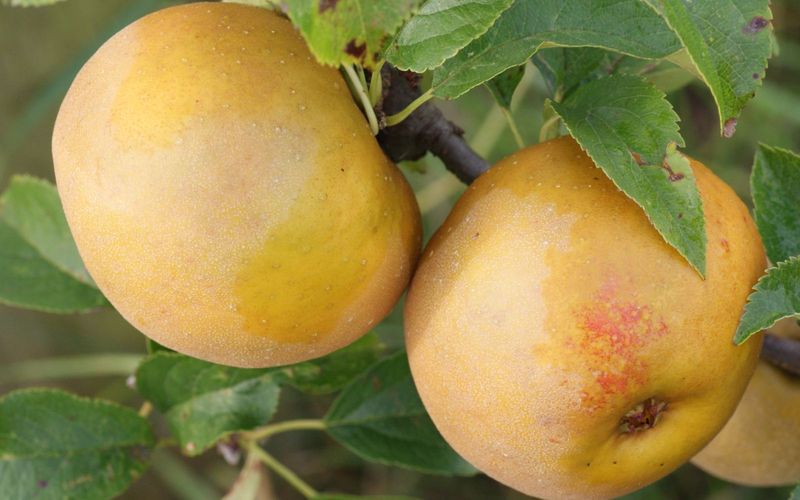
Russet apples invite a closer look. The skin can be rough and bronze, the flesh firm, the flavour more complicated than the bright colour of a supermarket apple might suggest. Yet “russet” describes a group of apples, not one standard fruit. Egremont Russet is the familiar name; Herefordshire Russet, Rosemary Russet and Ashmead’s Kernel take the choice in other directions.
For a British gardener, the interesting question is where to find the russet wanted in a tree that suits the garden. These eight suppliers offer different answers. Some are useful for exploring varieties, some for choosing a particular rootstock or starting form, and others for arranging a local purchase. The comparison separates those decisions so that enthusiasm for the fruit leads to a sensible tree order.
The Differences That Matter When Buying a Russet Apple Tree
The selection is based on named russet apple offers and the way those plants can be bought. Variety comes first, followed by rootstock, form and order conditions. A collection of attractive fruit descriptions is less useful if every tree available would eventually be too large for the planting space.
CRJ Fruit Trees leads with a range that extends beyond Egremont. The alternatives then introduce Habitat Aid’s orchard-sized Egremont, Buckingham and Blackmoor’s Herefordshire Russet offers, a more restricted Egremont from Roots, regional access through Tandee and Birds Farm, and a young Herefordshire Russet from Keepers. This sequence explores distinct purchases rather than presenting a numerical quality score.
The term russet is not a promise of identical taste or storage behaviour. Use the named cultivar’s description when comparing the fruit, and its rootstock specification when comparing the tree. Pollination should be resolved for the cultivar combination as well. Two trees of the same variety do not provide the genetic difference that a self-sterile apple needs from a compatible partner.
Best 8 Russet Apple Tree Suppliers for British Gardens
- CRJ Fruit Trees
Egremont is a sensible reference point, but the russet range at CRJ Fruit Trees encourages the buyer to look further. Its selection includes Rosemary Russet, Ashmead’s Kernel, Herefordshire Russet and other named apples alongside the familiar Egremont.
For someone planting only one or two trees, that is a useful opportunity to decide what kind of russet harvest is wanted. A familiar fruit may be the right answer. Alternatively, the planting can become a way to grow an apple that is less often encountered in ordinary shopping.
British gardeners can explore the russet apple selection from https://www.fruit-trees.com/ and then compare the available forms of the chosen cultivar. Keeping the variety decision ahead of the tree-size decision helps prevent an available plant from deciding the whole project by default.
The nursery’s appeal here is the breadth within the specific group. It gives the shortlist its opening question: which russet is worth making space for? Once that is answered, the rootstock, pollination partner and actual supplied form can be settled. The catalogue’s range is a starting point for that conversation, rather than a guarantee that every combination is ready for immediate dispatch.
- Habitat Aid
Habitat Aid’s Egremont Russet offer points towards a traditional garden or orchard tree. It lists maiden plants on MM106, labelled M106 on the page, or M25, with substantially different eventual size expectations.
Space for a lasting orchard tree makes these rootstocks relevant. The M25 option belongs in a setting where a larger tree is welcome. The MM106 route is more moderate, although still a different proposition from a very dwarfing patio apple.
Habitat Aid identifies R.V. Roger as the supplier of this tree. The retailer should therefore be understood as a buying route for nursery-grown material, rather than assumed to have raised the trees itself. It also operates a minimum checkout spend, which matters if the plan contains only one apple.
This offer makes most sense when the Egremont will form part of a larger order. Confirm the seasonal reservation before combining it with other plants, since the page carries both seasonal ordering information and availability notices. The positive attraction is a named russet on rootstocks suited to a substantial free-standing tree.
- Buckingham Nurseries
Buckingham Nurseries offers Herefordshire Russet as a bare-root maiden on MM106. This narrows the choice in a helpful way: the buyer is considering one named variety and an early stage of tree development.
Herefordshire Russet is described as having an aromatic, Cox-like flavour. That makes it worth investigating for someone who likes the idea of a russet but wants an alternative to Egremont. The maiden form then leaves the future framework to be developed after planting.
The nursery explains that its bare-root material is supplied while dormant and can be reserved ahead of that season. Collection from the garden centre provides an additional route for buyers within reach of Buckingham.
Herefordshire Russet and the maiden format define the purchase together. A maiden on MM106 gives a different project from purchasing an established specimen. Allow for the work of shaping it and for the space its rootstock requires; the attraction is participation in the tree’s development, not an instant finished crown.
- Blackmoor Nurseries
Herefordshire Russet also appears at Blackmoor, but with a choice of rootstock and age or form through the product selector. That makes it useful for a buyer whose variety decision is settled and whose attention has moved to the tree itself.
Blackmoor gives named pollination suggestions, including Egremont Russet, Discovery and other apples. The list helps connect the purchase with existing trees in the garden. It is still worth checking the chosen combination against local flowering conditions rather than relying on harvest dates, which describe a different part of the season.
The nursery offers mainland delivery and collection, while bare-root trees follow a dormant-season dispatch window. Those arrangements can suit either a single-tree purchase or a larger order assembled for planting together.
The comparison with Buckingham is straightforward: one offer specifies a maiden on MM106, while Blackmoor allows the buyer to investigate other currently available combinations. Choose from the actual selector, and record the form and rootstock on the order. They determine how the tree will occupy the garden long after the fruit description has been forgotten.
- Roots Plants
Roots Plants lists Egremont Russet on M26 in its younger tree options, including bare-root and potted material. For someone who wants the familiar russet in a more restricted framework than an M25 orchard tree, that is a relevant distinction.
The site separates arrival size, container size and rootstock. Read them together. A potted tree may look more substantial on delivery, while a younger bare-root tree on the same stock is starting a similar long-term growing relationship.
The fruit offer is recognisable: Egremont rather than a mystery russet or an unnamed patio apple. That makes this a useful comparison for someone who already knows the apple and is trying to fit it into the garden.
Each variant has its own availability and seasonal dispatch information. Pick the plant format that matches the intended planting period, then judge whether its future size suits the space. The M26 specification is the meaningful reason for considering this route; a temporary height measurement alone would give much less guidance.
- Tandee & Van den Berk Nurseries
Tandee’s Egremont Russet offer is particularly relevant to buyers near its nursery at Thurning, outside Oundle. The business offers regional delivery and encourages visits, creating a route in which the actual plant can be discussed before purchase.
That can be valuable for a tree destined for a prominent position. Branch arrangement and the height of the first framework branches are easier to judge when looking at the plant. A size selector on a website cannot always convey the same impression.
The published offer names Egremont and describes its eating qualities, but the rootstock for the selected tree should be established directly. The cultivar’s general height information is not a substitute for that answer.
This inclusion is about access to a named russet through a regional nursery. The opportunity to inspect or discuss the plant has most value within practical travelling distance of Thurning.
- Birds Farm Trees
At Birds Farm Trees, Egremont Russet is listed with M116 or MM106 rootstock information and bare-root or potted buying formats. The nursery is in Assington, Suffolk, and its page makes collection an important part of the offer.
The delivery wording needs a direct check: the page describes UK delivery for the product but labels particular options collection-only. That does not change the identity of the apple, but it can change whether the purchase is practical.
For a local gardener, the appeal is a named russet in a free-standing tree format, with the opportunity to arrange collection. For a distant buyer, the precise tree and carriage arrangement need to be agreed before it becomes a realistic alternative.
This is a useful example of comparing the whole purchase. The fruit may be familiar and the rootstock suitable, yet transport can decide the outcome. Its strongest fit is a buyer for whom the Suffolk collection route is manageable.
- Keepers Nursery
Keepers offers Herefordshire Russet as a one-year maiden, with separate rootstock lines. The reviewed listing included M26 and MM106 options, while other stocks had different availability.
A gardener can therefore hold the variety constant and compare two routes to the eventual size. The younger tree also suits someone who wants to establish the framework in its permanent position rather than transplant a more developed shape.
Keepers places the variety’s use in the autumn and winter season and describes its aromatic character. That gives the purchase a purpose beyond simply adding another russet label to a collection.
The nursery’s bare-root supply is seasonal, with orders directed towards the winter planting period. This is a strong final option for a planned purchase: a named cultivar, a young plant and a rootstock choice that can be considered before the garden is prepared.
Making Room for the Right Russet
Begin with the apple that interests you, then compare equivalent plants. A Herefordshire Russet maiden from one nursery and an Egremont on M25 from another differ in both fruit and future size. They cannot be judged sensibly by delivery height or headline price alone.
The shortlist gives several routes without requiring the same compromise from every buyer. Explore varieties through CRJ Fruit Trees, compare young Herefordshire Russet offers, or use a regional nursery to inspect an Egremont directly. The best purchase leaves the fruit preference intact while making the tree practical to live with.
Source note: Named cultivar listings, plant specifications and ordering conditions were used for this comparison. General apple and rootstock context was checked against RHS guidance. Supplier availability, selected options and delivery eligibility remain subject to confirmation.