
Introduction
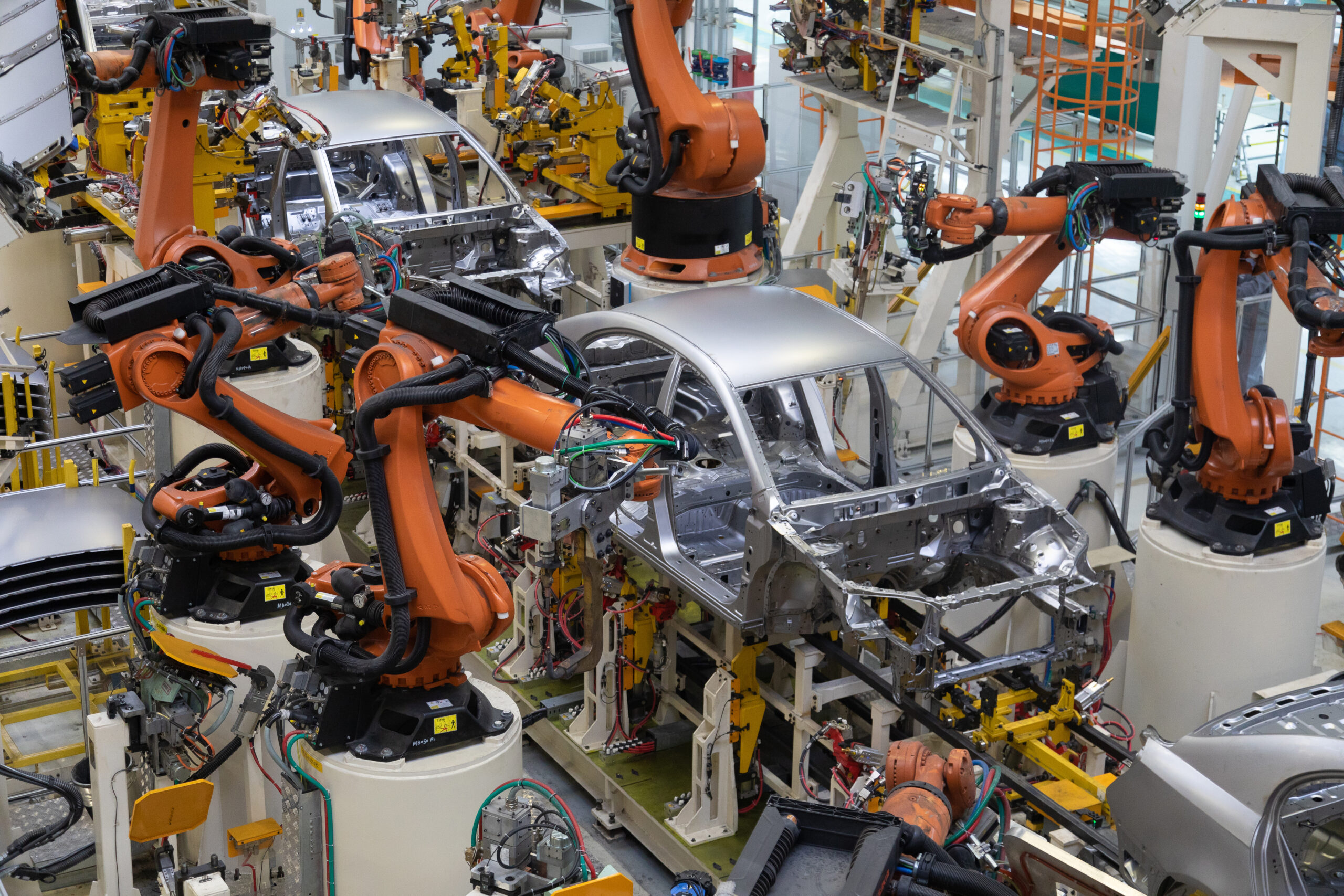
Automotive manufacturing has undergone a dramatic transformation over the past few decades. What once depended heavily on manual labor is now driven by automation and robotics, enabling faster production, consistent quality, and greater scalability. As global demand increases and vehicle technology becomes more complex, automation has become a strategic necessity rather than a competitive advantage.
Early Stages of Automation in Automotive Manufacturing
The first wave of automation focused on improving repetitive and physically demanding tasks. Industrial robots were initially introduced to enhance productivity and worker safety.
Key Early Applications
-
Robotic welding and spot welding
-
Automated paint spraying systems
-
Conveyor-based assembly lines
-
Basic quality inspection automation
These early systems laid the foundation for modern smart factories.
Rise of Advanced Robotics in Production Lines
Modern automotive plants now deploy highly sophisticated robotic systems capable of performing complex, high-precision tasks.
Capabilities of Modern Automotive Robots
-
Multi-axis movement for complex assemblies
-
Vision-guided systems for real-time adjustments
-
Collaborative robots working alongside humans
-
Consistent performance with minimal error rates
Manufacturers increasingly rely on automation leaders such as ABB, FANUC, and KUKA to optimize production efficiency.
Smart Manufacturing and Industry 4.0 Integration
Automation today extends beyond robotics. The integration of Industry 4.0 technologies has transformed automotive manufacturing into an intelligent, data-driven ecosystem.
Industry 4.0 Technologies in Automotive Plants
-
Internet of Things (IoT) sensors for real-time monitoring
-
Artificial intelligence for predictive maintenance
-
Digital twins for process simulation
-
Cloud-based manufacturing execution systems
These systems improve decision-making, reduce downtime, and enhance operational transparency.
Impact on Production Efficiency and Quality
Automation has significantly improved both the speed and reliability of automotive manufacturing processes.
Key Manufacturing Benefits
-
Higher production throughput
-
Reduced defect rates and rework
-
Improved consistency across vehicle models
-
Optimized material usage and waste reduction
Brands such as BMW and Toyota use automation to maintain high quality standards across global production facilities.
Workforce Transformation and Skill Evolution
While automation reduces manual labor requirements, it increases demand for skilled technical roles.
New Workforce Requirements
-
Robotics programming and maintenance
-
Data analysis and systems integration
-
Automation engineering and process optimization
-
Cybersecurity and software management
Rather than eliminating jobs, automation is reshaping the automotive workforce toward higher-value skills.
Challenges in Automated Automotive Manufacturing
Despite its advantages, automation introduces new challenges that manufacturers must manage carefully.
-
High initial investment costs
-
Complex system integration
-
Cybersecurity vulnerabilities
-
Dependence on skilled technical talent
Balancing automation with operational flexibility remains a critical consideration.
Future Outlook of Automotive Manufacturing
The future of automotive manufacturing will be defined by fully connected, flexible, and autonomous production systems. As electric vehicles and customized models gain popularity, factories will increasingly rely on modular robotics and AI-driven automation to adapt quickly to changing market demands.
Automation and robotics are no longer supporting tools—they are the backbone of modern automotive manufacturing.
Frequently Asked Questions (FAQs)
1. How does automation improve automotive manufacturing efficiency?
Automation increases production speed, reduces errors, and ensures consistent quality across vehicles.
2. Are robots replacing human workers in car factories?
Robots replace repetitive tasks, while humans focus on supervision, programming, and complex problem-solving roles.
3. What types of robots are commonly used in automotive manufacturing?
Welding robots, painting robots, assembly robots, and collaborative robots are widely used.
4. How does Industry 4.0 support automotive automation?
It enables real-time data monitoring, predictive maintenance, and intelligent decision-making.
5. Is automation only suitable for large automotive manufacturers?
While large manufacturers lead adoption, scalable automation solutions are increasingly accessible to smaller plants.
6. How does automation affect vehicle quality?
Automation improves precision and consistency, reducing defects and enhancing overall build quality.
7. What is the future role of robotics in automotive manufacturing?
Robotics will enable flexible production, customized vehicles, and fully autonomous smart factories.