
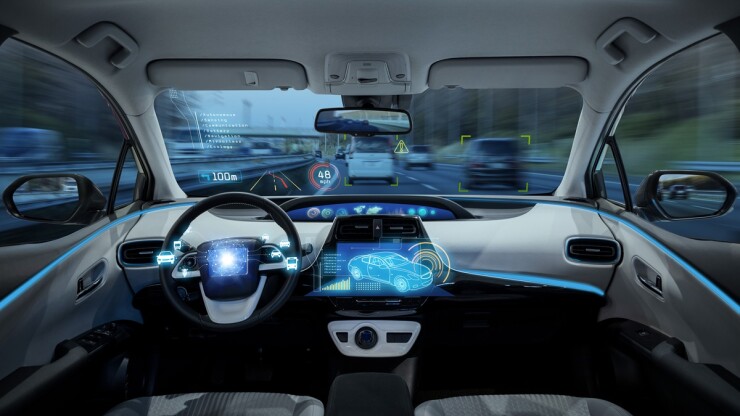
Introduction
Autonomous driving technology is redefining how people and goods move across cities and highways. Once limited to research labs and science fiction, self-driving vehicles are now being tested, refined, and gradually integrated into real-world transportation systems. This shift represents more than convenience—it signals a structural transformation of mobility, safety, and urban planning.
Understanding Autonomous Driving Technology
Autonomous vehicles rely on a combination of hardware and software to operate without direct human input. These systems continuously analyze surroundings, predict movement, and make driving decisions in real time.
Core Technologies Behind Self-Driving Vehicles
-
LiDAR and radar sensors for distance and object detection
-
High-resolution cameras for visual recognition
-
Artificial intelligence algorithms for decision-making
-
High-definition mapping and GPS for precise navigation
Technology companies and automakers such as Waymo, Tesla, and Mercedes-Benz are at the forefront of advancing autonomous driving capabilities.
Improving Road Safety Through Automation
Human error remains the leading cause of traffic accidents worldwide. Autonomous driving systems are designed to reduce this risk by eliminating distractions, fatigue, and delayed reactions.
Safety Benefits of Autonomous Vehicles
-
Continuous 360-degree environment monitoring
-
Faster reaction times than human drivers
-
Consistent adherence to traffic rules
-
Reduced risk of impaired or distracted driving
As automation improves, transportation systems are expected to see a significant decline in collision-related injuries and fatalities.
Enhancing Traffic Flow and Urban Mobility
Autonomous vehicles can communicate with each other and surrounding infrastructure, enabling smoother traffic movement and reduced congestion.
Transportation Efficiency Improvements
-
Optimized routing to avoid traffic bottlenecks
-
Adaptive speed control for smoother traffic flow
-
Reduced idle time at intersections
-
Better utilization of road capacity
These efficiencies support smarter cities by lowering emissions and improving overall travel time reliability.
Economic and Social Impact on Transportation Systems
The rise of autonomous driving technology extends beyond personal vehicles. It is reshaping logistics, public transport, and shared mobility services.
Key Industry Transformations
-
Autonomous delivery and freight transportation
-
Reduced operating costs for logistics providers
-
Expansion of ride-hailing and shared mobility models
-
Improved accessibility for elderly and disabled individuals
Transportation systems are becoming more inclusive and economically efficient as automation scales.
Infrastructure Evolution and Smart Cities
Autonomous vehicles thrive in environments equipped with intelligent infrastructure. Cities are adapting to support this shift.
Infrastructure Changes Supporting Autonomy
-
Smart traffic signals with vehicle communication
-
Dedicated lanes for autonomous vehicles
-
Enhanced road markings and digital signage
-
Integration with smart city data platforms
These upgrades help transportation systems operate as interconnected networks rather than isolated components.
Challenges Slowing Widespread Adoption
Despite rapid progress, autonomous driving technology still faces obstacles that must be addressed before full-scale deployment.
-
Regulatory uncertainty across regions
-
Ethical concerns around decision-making algorithms
-
Cybersecurity risks in connected vehicles
-
Public trust and acceptance
Resolving these challenges will determine how quickly autonomous transportation becomes mainstream.
The Future of Autonomous Transportation Systems
As technology matures, autonomous vehicles are expected to coexist with human-driven cars before gradually becoming dominant. Combined with electrification and connectivity, autonomy will form the foundation of future transportation ecosystems that are safer, cleaner, and more efficient.
Frequently Asked Questions (FAQs)
1. What levels of autonomous driving currently exist?
Autonomous driving is classified from Level 0 to Level 5, ranging from no automation to full self-driving capability.
2. Are autonomous vehicles legal to use on public roads?
Regulations vary by country and region, with many allowing testing and limited commercial deployment.
3. How do autonomous vehicles detect obstacles on the road?
They use a combination of sensors, cameras, radar, and AI-powered perception systems.
4. Will autonomous vehicles eliminate the need for human drivers?
In the long term, some driving roles may be reduced, but new technology-related jobs are also emerging.
5. How secure are autonomous vehicles from cyber threats?
Manufacturers implement advanced cybersecurity measures, though continuous updates are required to address evolving risks.
6. Can autonomous vehicles operate in extreme weather conditions?
Performance is improving, but heavy rain, snow, and fog still present challenges for sensor accuracy.
7. When will fully autonomous vehicles become widely available?
Widespread adoption is expected gradually over the next decade as technology, infrastructure, and regulations align.